Blog
Research Peptides: A Practical Guide for Scientific Use and Investor Insight


Introduction to Research Peptides
Research peptides are synthetic chains of 2 to 50 amino acids designed for laboratory investigation of cellular signaling, receptor interactions, hormones, and disease pathways. These compounds are sold under labels stating “research use only” or “not for human consumption,” clearly distinguishing them from FDA-approved therapeutics and consumer products intended for human use.
Common applications include receptor binding assays, preclinical drug discovery, biomarker validation, and in vitro mechanistic studies across oncology, endocrinology, and metabolic disease. However, there exists a critical distinction between legitimate lab use in accredited institutions and the risky self-administration marketed through bodybuilding, anti-aging, and weight-loss communities. Research peptides are now readily available online, increasing the risk of unregulated and potentially unsafe products.
This article covers how peptides are manufactured, key use cases, quality and safety concerns, the regulatory context, and why this research ecosystem matters indirectly to real estate investors—including firms like Granite Park Capital that focus on affordable and workforce housing in regions shaped by life-science employment.

What Are Research Peptides?
Peptides are short polymers of amino acids linked by peptide bonds, positioned between individual amino acid derivatives and full proteins in both size and complexity. Think of them as the middle ground in molecular architecture: large enough to perform specific biological functions, yet small enough to be synthesized and modified with relative efficiency.
Typical length ranges include:
| Category | Amino Acid Count | Examples |
|---|---|---|
| Dipeptides | 2 | Carnosine |
| Oligopeptides | 2–20 | Enkephalin (5), Angiotensin II (8) |
| Polypeptides | 20–50 | Insulin fragments, GLP-1 analogs |
| Proteins | 50+ | Albumin, antibodies |
Many natural hormones—including insulin fragments, GLP-1 analogs, and growth hormone-releasing peptides—fall into the peptide class. Researchers frequently modify natural peptide sequences to improve stability, half-life, or receptor selectivity in preclinical models. Common modifications include adding D-amino acids, acetylation, PEGylation, and lipidation, all aimed at extending the peptide’s functional duration in the body.
Solution-based peptide synthesis is another advanced method used to produce high-purity peptides, and peptides are sometimes provided as solutions for specific research applications.
It’s essential to understand the tiered quality distinctions:
- Research-grade peptides are used in vitro and in vivo experiments, typically at 95–99% purity
- GMP-grade peptides serve as active pharmaceutical ingredients in clinical trials, manufactured under stringent regulatory oversight
- Gray-market peptides are sold directly to consumers online, often without verifiable quality controls
Widely studied compounds like BPC-157 (studied for tissue repair), TB-500 (examined for wound healing), and CJC-1295 (investigated for growth hormone release) appear frequently in scientific research literature. However, their presence in laboratory studies does not equate to clinical approval for human use.
How Research Peptides Are Manufactured
Modern peptide synthesis relies primarily on solid-phase peptide synthesis, a technique developed by Robert Bruce Merrifield in 1963 and recognized with the Nobel Prize in Chemistry in 1984. This method anchors the growing peptide chain to an insoluble resin, enabling sequential amino acid addition with protecting groups that prevent unwanted side reactions.
The basic process involves:
- Resin attachment – The first amino acid is anchored to a solid support
- Deprotection – Protecting groups are removed from the amino terminus
- Coupling – The next amino acid is added through a peptide bond
- Repeat – Steps 2-3 continue until the full sequence is complete
- Cleavage and purification – The finished peptide is separated from the resin and purified
Automated peptide synthesizers and parallel synthesis platforms now produce custom peptides and extensive range libraries for high-throughput screening. Custom synthesis services allow researchers to order peptides with specific sequences tailored to their experimental needs, often delivered in lyophilized stable form for long-term storage.
Quality verification relies on two primary analytical methods:
- High performance liquid chromatography quantifies purity, with most research applications targeting 95–99%
- Mass spectrometry confirms molecular weight and sequence integrity, ensuring accuracy in the final product
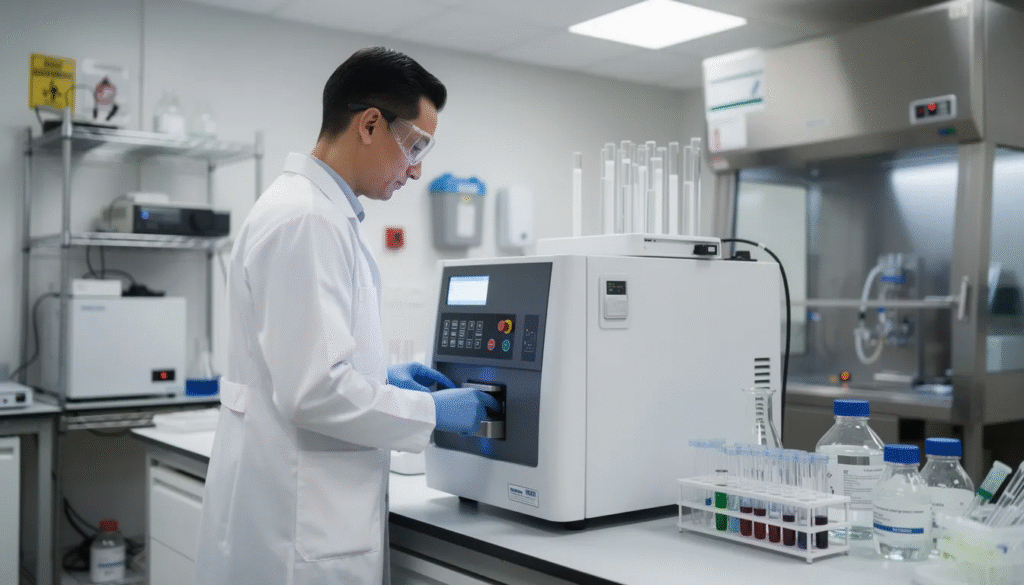
All research peptides are thoroughly tested using advanced analytical techniques to ensure purity and reliability.
The distinction between standard research-grade production facilities and cGMP-compliant plants matters significantly. Manufacturing sites in the USA are subject to rigorous quality control standards. Clinical-grade manufacturing requires extensive documentation, batch records, and regulatory audits—infrastructure that adds cost but ensures the highest standards for compounds entering human trials.
Custom Peptide Options
In the rapidly evolving world of scientific research, having access to custom peptide options is essential for driving innovation and achieving precise experimental outcomes. At USA Made Research Peptides, we recognize that every research project is unique, which is why we specialize in the custom synthesis of highly purified peptides, proteins, and amino acid derivatives. Our commitment to delivering the highest quality peptides ensures that researchers can confidently buy research peptides tailored to their specific scientific needs.
Our custom synthesis services empower researchers to design peptide blends with exact sequences, quantities, and purities, supporting a wide array of research purposes—from muscle growth studies and hormone regulation to investigations into complex bodily functions. Utilizing advanced technologies such as high-performance liquid chromatography (HPLC) and mass spectrometry, we rigorously verify the purity, accuracy, and identity of every peptide produced in our state-of-the-art USA production facilities. This meticulous approach guarantees that each peptide arrives in a stable form, ready for immediate use in laboratory settings.
When buying peptides online, quality and safety are paramount. We uphold the highest standards in every aspect of our operation, from sourcing raw amino acids to final packaging. Our peptides are intended strictly for research purposes and are not promoted for human use. Each batch is accompanied by comprehensive documentation, allowing researchers to review and verify the quality and purity before use. This transparency and dedication to excellence have established us as a trusted source for the best research peptides on the market.
Our extensive range of custom peptide options includes not only standard peptides but also specialized amino acid derivatives, proteins, and innovative peptide blends. Whether your research demands a single, highly purified peptide or a complex blend for advanced studies, our team is equipped to deliver solutions that meet your exact requirements. We work hard to provide exceptional support throughout the process, from initial consultation to final delivery, ensuring that every customer receives the value and service they deserve.
In addition to custom synthesis, we offer comprehensive services such as peptide production, precision packaging, and ongoing technical support. Our focus is on helping researchers achieve their development goals efficiently and safely, with a promise of quality and reliability in every order. We understand that the success of your research depends on the accuracy and consistency of your materials, and we are dedicated to being your partner in scientific advancement.
Explore our website to review our products, learn more about our custom peptide options, and discover how our expertise can support your research. Our knowledgeable team is always available to provide guidance, answer questions, and help you navigate the process of purchasing quality peptides for your laboratory. At USA Made Research Peptides, we guarantee the highest standards of quality, purity, and safety—delivering the solutions you need to advance your research with confidence.
Scientific and Medical Applications of Research Peptides
Peptide research expanded dramatically from the 1990s onward as advances in genomics, proteomics, and receptor pharmacology opened new investigative pathways. Today, pharmaceutical companies, biotech startups, and academic laboratory teams rely on research peptides across multiple therapeutic areas.
Oncology research represents a major focus, with scientists evaluating tumor-targeting peptides, peptide-drug conjugates, and peptide vaccines in preclinical and early-phase clinical studies. These approaches aim to deliver therapeutic payloads directly to cancer cells while sparing healthy tissue.
Metabolic disease investigation has yielded some of the most commercially successful peptide drugs to date. GLP-1, GIP, and amylin analogs used to probe obesity and type 2 diabetes pathways led to blockbuster medications approved throughout the 2010s and 2020s. Semaglutide, a GLP-1 agonist peptide, demonstrated 15–20% body weight reduction in clinical trials by binding receptors that delay gastric emptying and curb appetite.
Regenerative medicine and tissue repair studies examine peptides like BPC-157 and TB-500 in animal models for wound healing, tendon repair, and angiogenesis. Research suggests BPC-157 may accelerate tendon-to-bone repair and wound closure through upregulated growth factors and nitric oxide modulation, though rigorous human trials remain limited.
Endocrinology applications include growth hormone secretagogues and gonadotropin-releasing hormone analogs evaluated for controlled hormone modulation. Ipamorelin, for instance, selectively amplifies growth hormone pulses without the cortisol or prolactin spikes associated with broader secretagogues.
Beyond therapeutic development, peptides serve critical non-therapeutic roles:
- Diagnostic reagents in immunoassays
- Peptide standards in mass spectrometry proteomics
- Molecular tools to map protein interactions affecting bodily functions
The pharmaceutical development pipeline includes over 80 FDA-approved peptide drugs, representing roughly 10% of new approvals since 2016. Yet many specific research peptides circulating in the online market have never undergone rigorous human trials or regulatory review.

Quality, Purity, and Safety: Buyer Beware
Labeling products as “for research purposes only” allows vendors to bypass drug-level standards, creating a fragmented and sometimes unsafe marketplace. While reputable suppliers serve legitimate researchers with highly purified peptides meeting rigorous specifications, the market also includes anonymous storefronts selling products of questionable quality to customers seeking performance or anti-aging benefits.
Typical quality metrics for the best research peptides include:
| Metric | Standard | Verification Method |
|---|---|---|
| Purity | >95% or >98% | HPLC chromatogram |
| Identity | Confirmed sequence | Mass spectrometry |
| Documentation | Certificate of Analysis | Third-party testing |
| Packaging | Lyophilized, sealed vials | Visual inspection |
Buying peptides online from low-quality or anonymous suppliers introduces several risks:
- Contamination with solvents, heavy metals, or microbial agents
- Mislabeling or incorrect sequence, leading to invalid research or unexpected effects
- Inaccurate dosage due to improper lyophilization or filling
To ensure scientific accuracy and reliability, researchers should only buy peptides from suppliers who guarantee high purity, rigorous quality control, and advanced testing methods.
FDA seizures have found that approximately 30% of gray-market products suffer from mislabeling issues. For researchers, this compromises experimental validity. For individuals who misuse research peptides for self-injection without medical oversight, the dangers include infection risk, immune reactions, and unpredictable systemic effects.
Researchers should:
- Source from established, transparent suppliers with verifiable USA or EU facilities
- Request analytical data including HPLC reports and mass spectra
- Review Certificates of Analysis for batch consistency
- Comply with institutional biosafety and animal research committees
The promise of convenience from websites offering sale online should never outweigh the need to verify supply chain integrity.
Regulation and Ethics of Research Peptides
The regulatory landscape for research peptides involves multiple agencies depending on intended use. In the United States, FDA oversight applies once peptides are intended for use as drugs in humans, distinguishing between laboratory reagents and investigational new drugs requiring formal IND applications before clinical trials.
Key regulatory considerations include:
- Laboratory reagents are generally unregulated when used for legitimate scientific research in accredited settings
- Investigational new drugs require FDA approval through the IND process before human testing
- Controlled substances – certain peptide-like compounds may fall under DEA scheduling
The “not for human consumption” label does not exempt vendors or users from liability if products are marketed as therapies, bodybuilding aids, or anti-aging solutions without approval. Regulatory agencies have taken enforcement actions against companies making therapeutic claims about unapproved peptides.
Ethical responsibilities for researchers include:
- Using peptides only within approved protocols
- Ensuring proper storage, handling, and disposal
- Protecting animal welfare in accordance with IACUC standards
- Aligning with IRB requirements for any human-adjacent research
Global considerations add complexity. EU, UK, and other jurisdictions maintain their own classification systems for investigational peptides. Import and export rules for peptide APIs and research materials can affect cross-border studies, requiring researchers to work hard to maintain compliance across regulatory boundaries.
Economic Landscape of Peptide Research and Implications for Investors
Peptide R&D operates within a larger life-science ecosystem that has driven demand for specialized laboratory, manufacturing, and supporting real estate across the United States. Understanding this market helps investors identify where economic activity—and housing demand—may concentrate.
Concrete market data illustrates the scale:
| Metric | Value | Source Year |
|---|---|---|
| Global peptide therapeutics market | $42.2 billion | 2022 |
| Projected market size | $81.4 billion | 2030 |
| Compound annual growth rate | 8.6% | 2022-2030 |
| FDA-approved peptide drugs | 80+ | Current |
| Natural peptides identified | 7,000+ | Current |
Growth in peptide and biologics R&D contributes to:
- Expansion of life-science clusters in cities like Boston, San Diego, and Raleigh-Durham
- Increased need for affordable and workforce housing for laboratory technicians, researchers, and support staff in those metros
- Development of specialized production facilities requiring skilled workforces
From an investment perspective, sustained biotech and pharmaceutical growth can support long-term housing demand in secondary and tertiary markets near research hubs. Most people working in contract research organizations, hospital systems, and university laboratories earn moderate incomes despite their technical skills. These workers depend on accessible housing near employment centers.
Stable, government-backed affordable housing through programs like LIHTC, Section 8, and HUD contracts serves precisely this workforce. While Granite Park Capital does not invest directly in peptide manufacturers or biotech companies, understanding life-science trends helps inform where workforce housing demand may remain resilient over multi-decade horizons.

Granite Park Capital’s Focus: Affordable and Workforce Housing, Not Research Peptide Sales
Granite Park Capital is a real estate private equity firm focused on acquiring, owning, and managing affordable and workforce housing across the United States—not a seller or promoter of research peptides or any biomedical products. The company serves as the real estate arm of a fourth-generation family office, bringing institutional discipline to an essential asset class.
The firm’s strategy centers on:
- Investing in properties backed by federal and state programs including LIHTC, Section 8, and HUD contracts
- Targeting stable, inflation-protected cash flows with preferred returns for accredited investors and institutional partners
- Maintaining vertical integration across acquisitions, asset management, and property management
Life-science growth, including peptide research, matters indirectly to this thesis. High-skill job creation in biotech clusters raises regional housing needs. Lower- and middle-income workers in hospital systems, universities, and contract research organizations depend on accessible housing near employment centers. This creates durable demand in markets where Granite Park Capital operates.
The firm’s track record provides context for its capabilities:
| Metric | Value |
|---|---|
| Assets under management | $1.6B+ |
| Properties | 70+ |
| Housing units | 13,500+ |
| States with presence | 16 |
Accredited investors, family offices, and wealth managers interested in durable income strategies should explore Granite Park Capital’s affordable housing funds and investor events. Any exposure to peptide-related markets occurs through broader regional economic trends rather than direct biotech investments—positioning the firm to benefit from life-science growth without the volatility of development-stage therapeutics.