
Blog
Sterile Peptides: Handling, Quality, and Storage for Research Use

What Are Sterile Peptides?
Sterile peptides are synthetic peptides manufactured, handled, and packaged under conditions designed to prevent microbial contamination. These preparations are typically intended for cell culture and animal research conducted under GLP-like conditions, where introducing microorganisms could compromise experimental results or harm living systems.
Understanding the terminology around sterile peptides helps avoid costly mistakes in the lab:
- Sterile means no viable microorganisms are present in the peptide sample. This is achieved through aseptic processing or terminal sterilization methods such as filtration.
- Pyrogen-free indicates the absence of fever-inducing endotoxins, which are lipopolysaccharides from gram-negative bacteria. For in vivo experiments or sensitive cell lines, both sterility and low endotoxin levels matter.
- Most commercial research peptides arrive as lyophilized peptides that have low bioburden but are not necessarily terminally sterilized. Researchers often create sterile working solutions by filtering reconstituted peptides on-site.
- Sterile peptides for research are not automatically GMP-grade drug substances. Regulatory-grade compounds for human administration require full GMP manufacturing, validated sterilization, and extensive release testing beyond the scope of typical catalog products.
- When you buy peptides for research, always check whether the supplier provides sterility documentation or if you need to perform sterile filtration yourself before use in biological systems.
Production and Quality Control of Sterile Peptides
High-quality sterile peptides result from a combination of controlled solid-phase peptide synthesis, rigorous purification, and aseptic handling steps throughout production.
The journey from individual amino acids to a finished sterile peptide vial involves several critical stages:
- Peptide synthesis begins with protected amino acids serving as building blocks, assembled sequentially on a solid resin support. This method allows precise control over the peptide sequence and minimizes side reactions.
- After synthesis, the crude peptide is cleaved from the resin and subjected to preparative high performance liquid chromatography to achieve desired purity levels, typically ranging from 95% to 99% depending on the application.
- Peptide identity is confirmed using mass spectrometry, which verifies the correct molecular mass matches the expected sequence. Analytical methods also include analytical HPLC to determine purity by peak area integration.
- Quality control extends to checking amino acid composition through amino acid analysis, which can reveal unexpected amino acid residues or synthesis errors.
- Sterility is not guaranteed by purity alone. Low-bioburden manufacturing environments, depyrogenated glassware, and filtered solvents help minimize contamination before the peptide content is lyophilized into its final form.
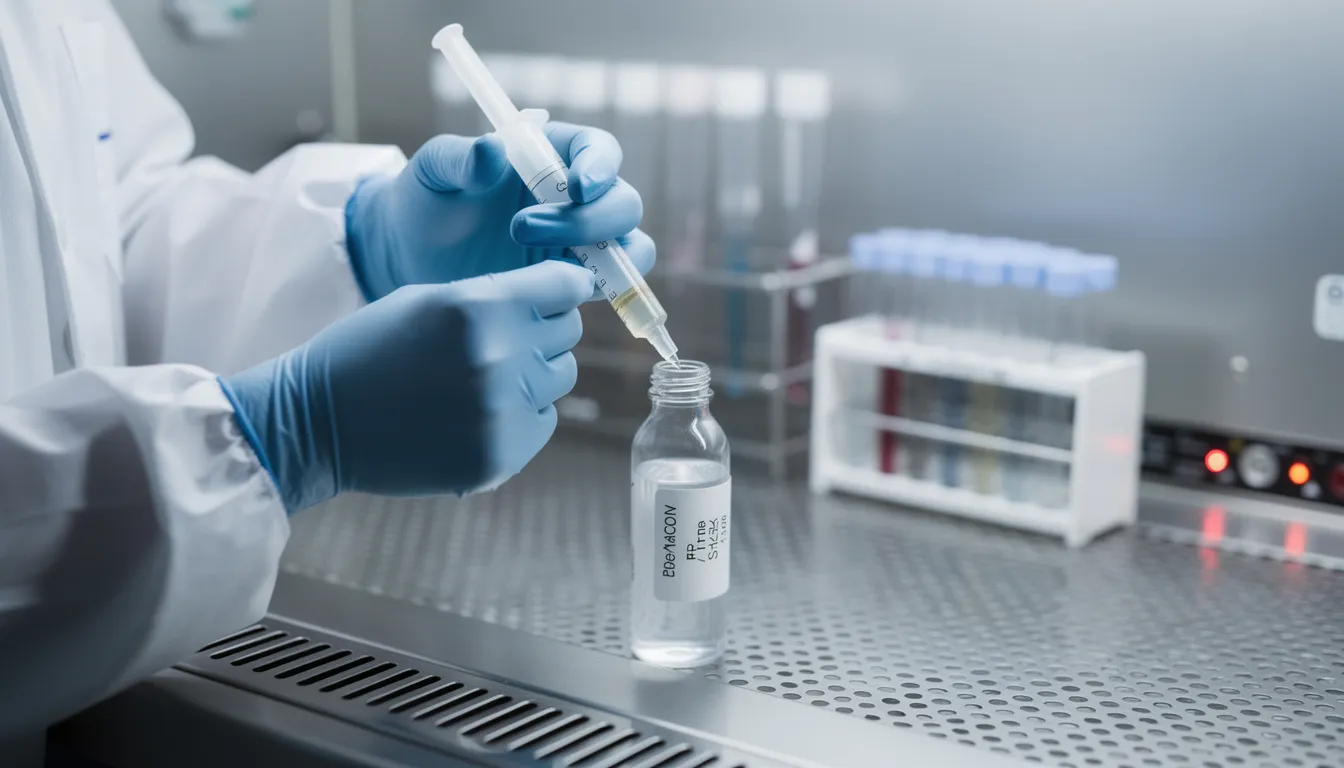
- For truly sterile solutions, many labs reconstitute the lyophilized powder and pass it through a 0.2 μm sterile membrane filter into a sterile vial under a laminar flow hood.
- Some suppliers offer optional sterility testing (following USP <71> protocols) and LAL endotoxin assay with certificates of analysis for sensitive applications involving cells or animal models.
Purity, Sterility, and Net Peptide Content
Purity, sterility, and net peptide content are related but distinct quality attributes that directly influence experimental accuracy and reproducibility.
- Peptide purity refers to the percentage of the main peptide peak relative to total detected material during analytical HPLC. Typical grades range from approximately 80% for crude material to >99% for highest quality peptides used in quantitative research.
- Sterility specifically addresses the absence of viable microorganisms and is usually assessed by culture-based sterility tests. A peptide can be chemically pure but still contain microbial contamination if not handled properly.
- Net peptide content describes the proportion of actual peptide compared to total lyophilized mass. This accounts for water content, salts such as residual TFA or acetate counterions, and residual solvents that remain after lyophilization.
- Net peptide content is often determined by amino acid analysis or elemental analysis measuring nitrogen content. This data helps researchers calculate accurate molar concentrations rather than relying on gross weight alone.
- For quantitative in vitro assays, calculating concentrations based on net peptide content prevents under- or overdosing test systems, which is especially important when comparing results across different peptide batches.
- Low-purity peptides may contain peptidic by-products or amino acid derivatives with unexpected bioactivity. Non-peptidic residues like scavengers and counterions are typically present at trace levels but can still affect sensitive biological systems.
- Most peptides from reputable suppliers include certificates of analysis specifying purity, but net peptide content must sometimes be requested separately or quantified in-house.
Storage and Stability of Sterile Peptides
Proper storage conditions are essential to maintain both sterility and structural integrity of peptides over their shelf life, whether measured in weeks or years.
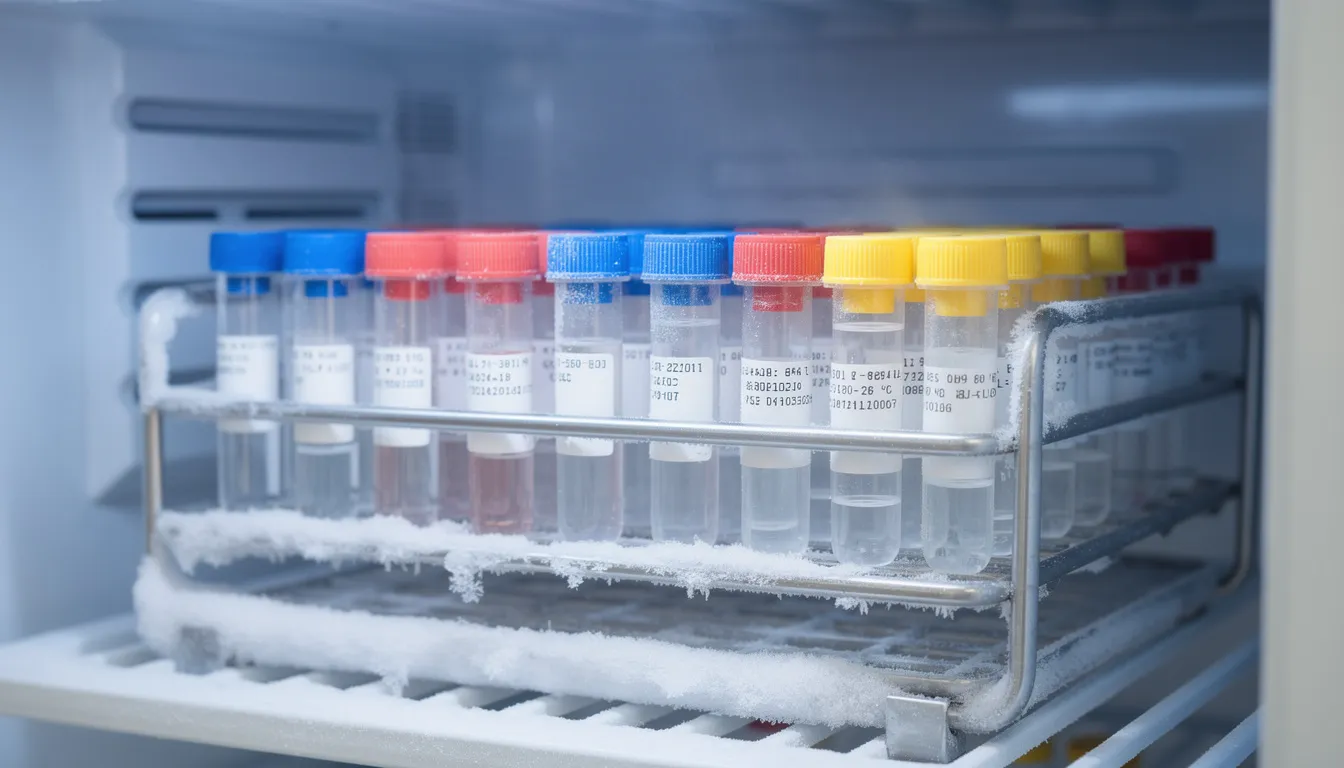
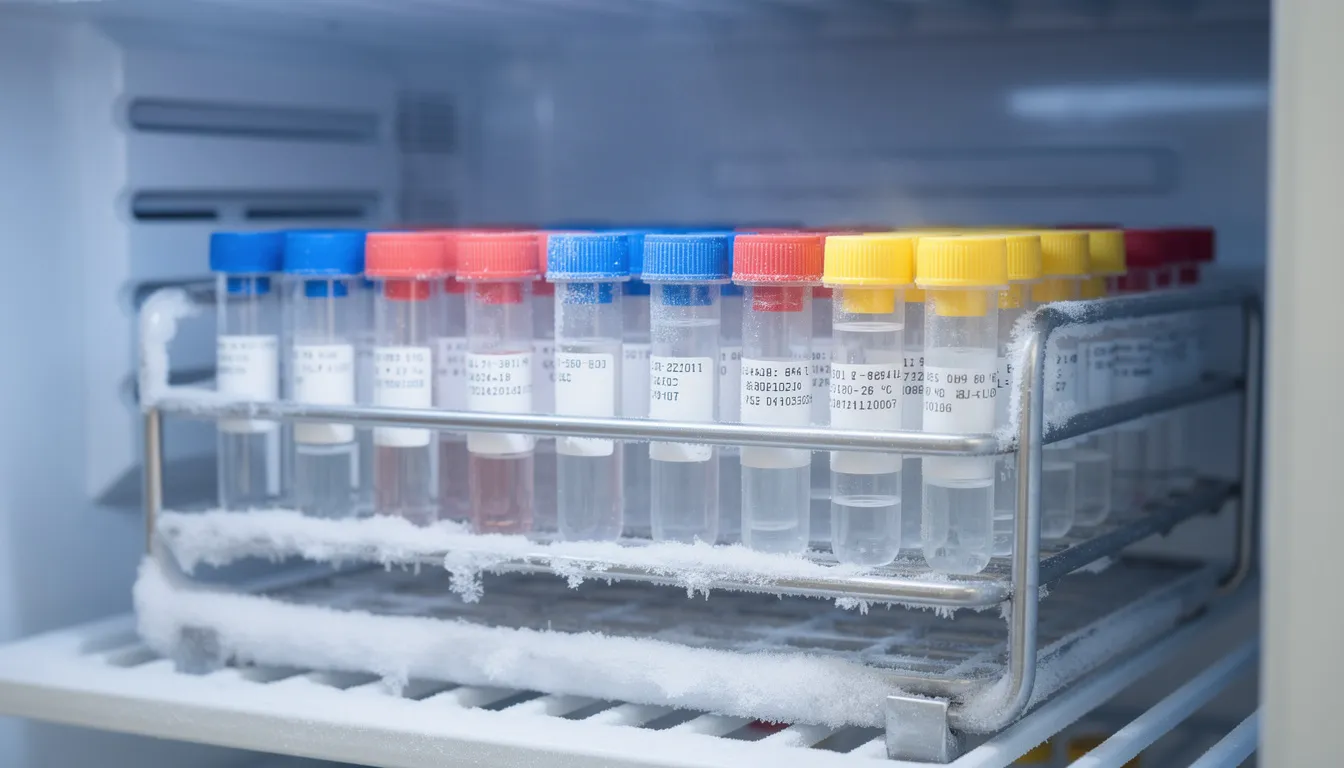
- Lyophilized peptides should typically be stored at -20°C or lower, protected from bright light and moisture, in tightly sealed vials. More sensitive sequences containing oxidation-prone residues are sometimes kept at -80°C for long term storage.
- Trp residues, along with cysteine and methionine, are particularly prone to oxidation. Peptides containing these amino acids should be stored under inert gas such as nitrogen or argon, with minimal headspace exposure to oxygen.
- Basic and acidic residues including lysine, arginine, histidine, aspartate, and glutamate increase hygroscopicity. Such peptides should be stored in a desiccator or with desiccant packs to prevent moisture uptake and aggregation.
- Once reconstituted into solution, peptide stability drops significantly. Prepare single-use aliquots in the desired quantity, store them at -20°C, and avoid repeated freeze thaw cycles to preserve both potency and sterility.
- Sterile-filtered solutions should be labeled with peptide name, sequence or internal code, concentration, solvent composition, filtration date, and storage temperature. Use reconstituted solutions within a defined timeframe—typically days at 4°C or a few weeks when stored frozen, dependent on the specific sequence.
- Following these storage guidelines helps maintain the quality of custom peptides and ensures reproducible results across experiments.
Preparing and Handling Sterile Peptide Solutions
Correct preparation technique is crucial to avoid contamination and ensure reproducible concentrations in your assay or experiment. A small amount of extra care during reconstitution pays dividends in data quality.
- Allow lyophilized peptide vials to equilibrate to room temperature before opening. This prevents moisture condensation on the powder, which can affect stability and lead to clumping.
- Weigh the required quantity of peptide quickly using a calibrated microbalance. Minimize exposure to room air and humidity by promptly resealing the original vial with the remaining material.
- Select an appropriate sterile solvent considering peptide solubility and your intended application. Common choices include sterile water for injection, sterile PBS at neutral pH, or sterile-filtered buffer. Hydrophobic peptides may require a small amount of acetic acid, urea, or organic co-solvent to achieve complete dissolution.
- After the peptide is fully dissolved—using gentle vortexing or brief sonication if needed—pass the solution through a sterile 0.2 μm low-protein-binding filter into a sterile, labeled container inside a biosafety cabinet.
- Prepare small aliquots in sterile cryovials to avoid multiple freeze-thaw cycles. Discard any aliquot that shows visible turbidity, precipitate, or signs of contamination before use.
- Document the preparation date, concentration, solvent composition, and analyst name for each batch. This reference sample information supports troubleshooting if experimental results later seem inconsistent.
Recommended Sterile Peptide Grades for Different Applications
Not all experiments require the same level of chemical purity or sterility. Choosing the right grade optimizes both data quality and budget, ensuring you’re not overspending on routine screening or underspecifying for critical studies.
- Basic biochemical assays or initial screening may be performed with high-purity (≥90%) peptides that are handled carefully but not necessarily sterile-filtered, provided no cells or animals are involved and the compounds are used for binding or stability studies only.
- Cell culture studies, receptor binding assays, and ex vivo work generally require ≥95–98% pure peptides prepared in sterile buffer and passed through a 0.2 μm filter to minimize microbial burden. This is where most research peptide applications fall.
- In vivo animal experiments typically require both very high purity (often ≥98%) and strict control of sterility and endotoxin levels. Documentation from the supplier or in-house testing may be necessary to satisfy institutional animal care requirements.
- Regulatory preclinical or translational studies may need GMP-grade peptides manufactured under full compliance, involving validated sterilization, extensive release testing, and complete traceability—going well beyond standard research-grade production.
- Customers interested in peptides containing unusual modifications or non-standard amino acid residues should discuss their specific needs with suppliers, as these may require custom peptides with tailored analytical methods and stability data.
Frequently Asked Questions (FAQ)
How can I tell if my peptide solution is still sterile after storage?
Sterility cannot be confirmed visually. Clear solutions can still be contaminated, and only microbiological testing such as culture-based sterility tests can provide high confidence that no viable organisms are present.
Any change in appearance—cloudiness, unexpected precipitate, color shift—or unusual odor is a warning sign. Such solutions should be discarded rather than used in sensitive assays. The accuracy of your experimental results depends on using only properly stored and handled materials.
Limit storage time for reconstituted peptides. For most sequences, this means days at 4°C or a few weeks at -20°C. Document preparation and expiry dates for each batch to ensure stable materials are always available.
Do I always need to sterile-filter peptide solutions for cell culture?
While many lyophilized research peptides have low bioburden, sterile filtration through a 0.2 μm filter is strongly recommended before adding them to cell culture systems. This step protects your cells and ensures experimental reproducibility.
Filtration not only reduces microbial contamination but also removes particulates that might interfere with microscopy, flow cytometry, or other downstream analysis methods.
Perform filtration after the peptide is fully dissolved, using a sterile, low-protein-binding membrane and sterile collection tubes. This approach works well for most peptides, though some hydrophobic sequences may require solubility optimization first.
What is the difference between a “sterile” peptide and a GMP-grade peptide?
A sterile peptide for research has been handled to minimize microbial contamination and may be sterile-filtered, but it is not necessarily produced under full Good Manufacturing Practice controls.
GMP-grade peptides are manufactured, tested, and documented according to regulatory standards suitable for clinical use. This includes validated sterilization, complete traceability, and rigorous quality system oversight throughout production.
Most academic and early-stage industrial research uses non-GMP sterile peptides, whereas clinical trials and marketed therapeutics require GMP-grade materials with extensive supporting data.
Can I re-use a 0.2 μm filter for multiple peptide preparations?
Single-use sterile filters are designed for one filtration session and should not be reused. Re-use increases the risk of cross-contamination between peptide samples and may cause clogging that reduces filtration efficiency.
Each new peptide solution should pass through a fresh, sterile, appropriately rated filter to maintain confidence in sterility. This is especially important when working with peptides destined for cell culture or in vivo applications.
Dispose of used filters as biohazardous or chemical waste according to institutional guidelines, particularly if the peptides were tested in biological systems or contained chloride salts or other compounds requiring special disposal.
How do counterions like TFA or acetate affect sterile peptide solutions?
Counterions such as trifluoroacetate or acetate are remnants of purification buffers and act as salt forms of the peptide. They influence solubility and can affect solution pH but do not directly impact sterility.
Residual TFA cannot be completely removed by standard lyophilization. Researchers concerned about biocompatibility—particularly those using sensitive cells or in vivo models—may request alternative counterions like acetate or chloride when ordering peptides.
When working with sensitive applications, consider the total amount of counterion introduced with your peptide dose. If necessary, dialyze or buffer-exchange peptide solutions after dissolution and sterile filtration using gas chromatography or other analytical methods to verify removal of unwanted solvents.