
Blog
Best Peptides for Anti Ageing: Top Ingredients, How They Work & How to Use Them

Key Takeaways
Peptides are short chains of amino acids—typically 2 to 50 residues—that function as signaling molecules in your body, instructing skin cells to ramp up collagen production, repair damage, and maintain structural integrity. As we age, these natural biological processes slow down, leading to wrinkles, loss of firmness, and changes in skin texture. This article breaks down the best research-backed peptides for anti aging and explains exactly how to use them.
Top peptides to know:
- GHK-Cu (Copper Tripeptide-1): Best for overall skin rejuvenation, wound healing, and post-procedure recovery
- Matrixyl / Palmitoyl Pentapeptide-4: Best for reducing wrinkle depth and improving skin firmness over time
- Palmitoyl Tripeptide-1: Best for stimulating collagen I, III, and IV synthesis in mature skin
- Argireline (Acetyl Hexapeptide-8): Best for softening expression lines around eyes and forehead
- SNAP-8 (Acetyl Octapeptide-3): Best for enhanced wrinkle relaxation with improved stability
- Acetyl Tetrapeptide-2: Best for lifting and firming sagging skin, particularly along the jawline
Topical peptide serums and creams work differently than injectable treatments or in-clinic procedures. Serums act primarily in the upper skin layers and require consistent use, while injectables deliver peptides deeper under professional supervision. Both approaches will be compared throughout this guide.
Visible improvements typically appear within 4–12 weeks of consistent use, based on published clinical and cosmetic studies from 2004–2022 on ingredients like Matrixyl, Argireline, and GHK-Cu.
If you’re short on time, skip ahead to the “How to Choose and Use Peptide Products in Your Routine” section or the FAQ at the end for quick answers.
What Are Peptides and Why They Matter for Anti Ageing
Peptides are short sequences of amino acids that act as “messengers” in your body. Think of them as email instructions sent directly to your fibroblasts—the cells responsible for producing collagen, elastin, and other proteins that keep skin looking firm and smooth. When these messengers arrive, they trigger specific responses: build more collagen, repair damaged tissue, reduce inflammation.
How ageing affects your skin and how peptides help:
- From your 30s onward, intrinsic ageing causes a decline in collagen synthesis—roughly 1% less collagen per year—leading to fine lines and reduced skin elasticity
- Photoageing from UV exposure accelerates collagen and elastin breakdown, creating deeper wrinkles and uneven skin tone
- Certain peptides counter these processes by signaling fibroblasts to increase collagen and elastin production, restoring what time and sun damage have diminished
- Other peptides inhibit enzymes that break down existing collagen or reduce muscle micro-contractions that cause expression lines
The main functional classes relevant to anti aging:
| Peptide Type | How It Works | Example |
|---|---|---|
| Signal peptides | Boost collagen/elastin production | Matrixyl, Palmitoyl Tripeptide-1 |
| Carrier peptides | Deliver metal ions (like copper) for enzyme function | GHK-Cu |
| Neurotransmitter-inhibiting peptides | Relax facial muscles to reduce expression wrinkles | Argireline, SNAP-8 |
| Enzyme inhibitor peptides | Slow collagen breakdown by blocking MMPs | Soy-derived peptides |
Not all peptides are created equal. Some—like GHK-Cu, Matrixyl, and Argireline—have decades of human data supporting their efficacy. Others are newer with early but promising evidence. The key is understanding which peptides address your specific concerns.
The Best Clinically Studied Peptides for Anti Ageing
This section covers the most referenced cosmetic and aesthetic peptides based on published data from the 1990s through the 2020s, along with their real-world applications in dermatology and med-spa settings. Each peptide is evaluated for concrete benefits, study details, and product formats.
GHK-Cu (Copper Tripeptide-1)
GHK-Cu is a naturally occurring tripeptide—glycyl-L-histidyl-L-lysine bound to copper—first identified in human plasma in the 1970s by researcher Loren Pickart. Originally noted for its remarkable tissue repair properties, it has evolved into one of the most versatile anti aging ingredients available in both topicals and injectables.
What the research shows:
Clinical and laboratory studies demonstrate that copper peptides improve skin firmness, skin elasticity, and thickness while reducing fine lines over 4–12 weeks of use. In vitro studies have shown collagen synthesis increases of up to 70%. GHK-Cu also modulates over 4,000 genes related to tissue repair and inflammation reduction, making it exceptionally broad-spectrum in its effects.
Key mechanisms:
- Stimulates collagen production and elastin production
- Enhances glycosaminoglycan synthesis for improved skin hydration
- Provides antioxidant properties by neutralizing free radicals
- Supports wound healing and post-procedure recovery (after laser, microneedling)
- Normalizes aged fibroblast function
Typical cosmetic applications:
- Night serums for overall skin rejuvenation
- Eye products targeting fine lines and skin firmness
- Recovery creams for post-procedure care
- Concentrations typically range from 0.5–2% in consumer products
Pros and cons:
| Advantages | Considerations |
|---|---|
| Extensive evidence base spanning decades | Can be expensive in effective concentrations |
| Multi-benefit ingredient addressing multiple ageing signs | Potential irritation in very sensitive skin |
| Naturally occurring in the body | Destabilizes when combined with strong acids or low pH formulas |
Matrixyl Family (Palmitoyl Pentapeptide-4 and Related Peptides)
“Matrixyl” refers to a family of signal peptides that includes Palmitoyl Pentapeptide-4 and the Matrixyl 3000 blend (Palmitoyl Tripeptide-1 + Palmitoyl Tetrapeptide-7). These peptides mimic fragments of broken collagen, essentially tricking your skin into thinking damage has occurred and triggering repair responses.
Clinical evidence:
Well-documented 8–12 week cosmetic trials show statistically significant decreases in wrinkle depth and volume. Participants also demonstrated improved skin tone, density, and overall skin appearance in photoaged skin. These peptides enhance skin health by supporting the dermal matrix without the irritation associated with stronger actives.
How to use them effectively:
- Best in leave-on serums and peptide creams at meaningful concentrations (around 2–5% combined actives)
- Suitable for daily use, including around the delicate eye area
- Pair well with hyaluronic acid and ceramides for enhanced skin barrier support
- Results build gradually over months—think of them as “workhorse” ingredients for long-term maintenance
Matrixyl-type peptides won’t deliver instant tightening, but they excel at steady, cumulative improvements in skin texture and wrinkle formation prevention.
Palmitoyl Tripeptide-1 and Collagen-Supporting Tripeptides
Palmitoyl Tripeptide-1 is a signal peptide that activates synthesis of collagen I, III, and IV—the primary structural proteins in your dermis. It can be used alone or in blends with Palmitoyl Tetrapeptide-7 for stronger anti-wrinkle effects.
What it targets:
- Improved dermal matrix structure
- Enhanced skin firmness and elasticity
- Reduction in fine lines
- Particularly effective for mature skin or photo-damaged skin
Studies typically run 6–12 weeks, showing measurable improvements in skin structure and overall skin rejuvenation.
Common product formats:
- Eye creams for crow’s feet and under-eye lines
- Firming serums for face and neck
- Neck and décolleté creams for sagging skin
This peptide works synergistically with antioxidants and moisturizers. If you’re noticing early laxity around the jawline, cheeks, or eye area, Palmitoyl Tripeptide-1 formulations may be especially beneficial for cellular repair and firmer skin over time.
Argireline (Acetyl Hexapeptide-8)
Argireline is the best-known neurotransmitter inhibitor peptide, often nicknamed the “Botox-like peptide” because it targets the SNARE complex involved in acetylcholine release at neuromuscular junctions. This mechanism relates to how muscle contractions create expression lines.
What the studies show:
Human data demonstrates up to roughly 20–30% reduction in wrinkle depth around the eyes or forehead after about 28–30 days of twice-daily topical use. This aligns with research showing that topical Argireline can reduce expression wrinkles by 30% in 30-day studies via acetylcholine blockade.
Important clarification:
Argireline does not paralyze facial muscles like botulinum toxin does. Instead, it slightly reduces repetitive micro-contractions, softening expression lines without affecting normal facial movement.
Ideal use cases:
- Younger users wanting prevention of expression lines
- Those extending time between injectable neurotoxin appointments
- Targeting forehead lines, crow’s feet, and frown lines
- Best delivered in serums that can penetrate effectively
Generally gentle for most skin types, though occasional irritation is possible when combined with strong acids. Separate from low-pH exfoliants in your routine.
SNAP-8 (Acetyl Octapeptide-3)
SNAP-8 is essentially an extended version of Argireline, designed to enhance efficacy and stability while working on the same SNARE complex pathway that influences muscle contraction.
Published findings:
Cosmetic studies suggest up to roughly 50–60% wrinkle depth reduction in 4 weeks under controlled conditions. Real-world results vary based on product formulation, concentration, and individual response.
How it compares to Argireline:
| Feature | Argireline | SNAP-8 |
|---|---|---|
| Peptide length | 6 amino acids | 8 amino acids |
| Generation | First generation | Second generation |
| Potency | Established baseline | Often more potent at similar concentrations |
| Stability | Good | Improved |
SNAP-8 is commonly found in advanced anti-wrinkle serums and often combined with multiple peptides like Matrixyl for addressing both dynamic expression lines and static wrinkles.
Acetyl Tetrapeptide-2 and Other Firming Peptides
Acetyl Tetrapeptide-2 targets skin’s structural proteins and mechanical properties, making it particularly relevant for lifting and firming mature skin or sagging skin that has lost elasticity.
Trial results:
28-day cosmetic trials report improved perceived firmness, better contour definition (especially along the jawline and neck), and improved elasticity scores. This synthetic peptide addresses the deeper structural changes that occur with ageing.
Who benefits most:
- People in their 40s–60s noticing laxity rather than just fine lines
- Those concerned about neck and décolleté ageing
- Anyone wanting to improve skin elasticity and definition
Common product formats include neck creams, firming serums, and jawline-targeting treatments. Other firming peptides like Tetrapeptide-21 exist, but Acetyl Tetrapeptide-2 has the most substantial evidence for contour improvement.
Enzyme-Inhibiting and Antioxidant Peptides
Enzyme inhibitor peptides derived from soy, rice, silk, or synthetic sequences work by inhibiting matrix metalloproteinases (MMPs)—the enzymes that break down collagen and elastin in your skin.
How they complement other peptides:
- Help preserve existing collagen rather than just building new collagen
- Protect against UV- and pollution-induced degradation
- Work alongside signal peptides that stimulate collagen production
Antioxidant peptide activity:
Some peptides enhance skin health through antioxidant properties—neutralizing free radicals, reducing inflammation, and supporting skin barrier function. While not as dramatic as direct collagen stimulators, they provide a protective layer that prevents further damage.
The most comprehensive anti aging approach combines collagen-stimulating, enzyme-inhibiting, and antioxidant peptides rather than relying on just one type.
How Peptides Improve Skin: Mechanisms and Benefits
Understanding how peptides work helps you choose the right ones for your concerns. Peptide therapy addresses the main signs of skin aging: wrinkles, laxity, rough texture, dullness, and impaired barrier function.
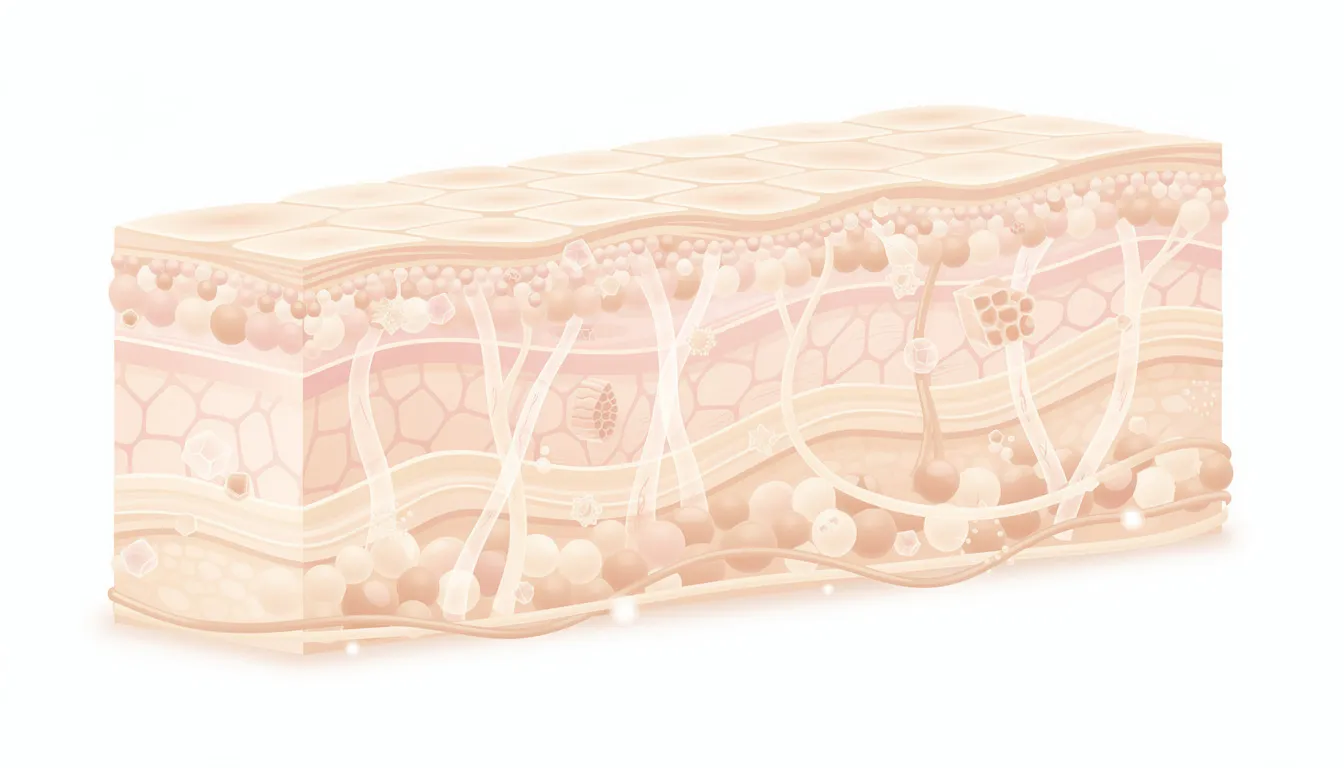
Key mechanisms of action:
- Fibroblast stimulation: Signal peptides trigger fibroblasts to produce more collagen and elastin, the proteins responsible for skin structure and bounce
- Glycosaminoglycan production: Peptides enhance hyaluronic acid and other glycosaminoglycans, improving skin hydration and plumpness
- Inflammatory modulation: Certain peptides like Palmitoyl Tetrapeptide-7 reduce inflammatory cytokines such as IL-6, which accelerates ageing
- Barrier lipid support: Some peptides help maintain the skin barrier, reducing moisture loss and protecting against environmental stressors
- Enzyme inhibition: By blocking collagenase and other MMPs, peptides preserve existing structural proteins
- Muscle relaxation: Neurotransmitter inhibitor peptides reduce acetylcholine release, softening expression lines without paralysis
Carrier peptides like GHK-Cu work differently—they deliver essential trace metals like copper that serve as cofactors for enzymes involved in collagen cross-linking and skin repair.
Timeline of effects:
| Timeframe | What to Expect |
|---|---|
| Days to 2 weeks | Improved skin hydration, smoother skin texture |
| 4–8 weeks | Visible reduction in fine lines, better skin tone |
| 8–12 weeks | Measurable firmness improvements, reduced wrinkle depth |
| 3–6 months | Continued structural improvements in skin firmness and elasticity |
Peptides complement rather than replace established actives like retinoids, niacinamide, and sunscreens. They work synergistically—retinoids boost cell turnover while peptides enhance skin regeneration and collagen synthesis.
Topical vs Injectable Peptides: What’s the Difference?
Most readers will encounter peptides in over-the-counter skincare products like serums and creams. However, injectable peptides and in-office delivery methods (microneedling, laser-assisted application) represent a different category of anti aging treatments with distinct considerations.
Topical peptides:
- Act primarily in the epidermis and upper dermis
- Typical concentrations range from 0.5–5% depending on the peptide
- Require consistent use over 2–3 months for meaningful results
- Gradual improvements that build over time
- Accessible without medical supervision
Injectable or procedure-assisted delivery:
- Achieves deeper penetration into dermal layers
- More targeted collagen stimulation
- Requires supervision by dermatologists or qualified aesthetic professionals
- Stricter safety protocols and potential for side effects
- Generally faster, more dramatic results
The penetration challenge:
The skin barrier—specifically the stratum corneum—limits how well topical peptides can penetrate. This is why many products rely on lipophilic modifications (like palmitoylation, where a fatty acid is attached to the peptide) or encapsulation systems to improve delivery.
Injectable treatments bypass these barriers entirely, which is why they often produce more pronounced effects. However, they also carry higher risks and costs compared to topical peptides.
Improving Peptide Penetration and Bioavailability
The main challenge with peptides for skin is that most are relatively large and water-loving molecules, making it difficult for them to efficiently cross the stratum corneum—your skin’s outer protective layer.
Formulation approaches that help:
- Liposomes and niosomes: Lipid-based spheres that encapsulate peptides and fuse with skin membranes
- Nanoemulsions: Ultra-fine oil-in-water systems that enhance penetration
- Encapsulation systems: Protective coatings that release peptides gradually
- Palmitoylation: Attaching fatty acid chains to make peptides more lipophilic
Procedure-based enhancement methods:
| Method | How It Works | Setting |
|---|---|---|
| Microneedling | Creates temporary microchannels in skin | Clinical or at-home (with appropriate device) |
| Ultrasound/Sonophoresis | Uses sound waves to increase permeability | Clinical |
| Fractional lasers | Creates microscopic treatment zones | Clinical only |
| Radiofrequency | Heats tissue to enhance absorption | Clinical |
For at-home users, focus on well-formulated products from reputable brands that use advanced delivery systems. Procedures like professional microneedling or laser treatments require proper oversight and can significantly enhance peptide penetration when combined with appropriate formulations.
How to Choose and Use Peptide Products in Your Routine
The “best” peptide depends on your main concerns, age bracket, skin sensitivity, and whether you also use retinol, acids, or vitamin C. Here’s how to match peptides to your needs:
For fine lines and early ageing (20s–30s):
- Focus on Argireline / SNAP-8 plus Matrixyl-type peptides
- Lightweight serums work well for younger, typically oilier skin
- Emphasis on prevention rather than repair
For visible wrinkles and loss of firmness (30s–50s):
- Prioritize GHK-Cu, Matrixyl blends, Palmitoyl Tripeptide-1, and Acetyl Tetrapeptide-2
- Richer serums and peptide creams provide additional hydration
- Look for products that improve skin firmness and boost collagen
For very dry, barrier-impaired, or acne prone skin:
- Choose peptide creams with barrier-supporting lipids and ceramides
- Copper peptides work well at night for skin repair
- Avoid heavily fragranced formulas that may irritate
Layering order for your routine:
Morning:
- Cleanse
- Optional toner or essence
- Water-based peptide serum
- Moisturizer
- Broad-spectrum SPF (non-negotiable)
Evening:
- Cleanse
- Optional toner or essence
- Peptide serum (before or after retinoid depending on formulation)
- Moisturizer or peptide cream
Important: Avoid pairing peptides simultaneously with strong low-pH exfoliating acids (glycolic, salicylic) or pure L-ascorbic acid vitamin C. These can destabilize peptides and reduce efficacy. Separate by time of day or use on alternate nights.
Consistency matters:
Most studies and real-world reports show meaningful improvement after at least 4–8 weeks of twice-daily use, with further gains up to 3–6 months. Peptide therapy is a marathon, not a sprint.
Safety, Side Effects and When to Be Cautious
Peptides are generally well tolerated and less irritating than many retinoids or strong acids. This makes them suitable for sensitive skin or rosacea-prone skin when introduced gradually.
Potential side effects:
- Mild redness or tingling when starting a new product
- Temporary breakouts, especially with copper peptides
- Reactions to preservatives or other formula ingredients (not the peptides themselves)
How to minimize risk:
- Patch test a new peptide product on a small facial area for several days before full-face use
- Start with every-other-day application, then increase frequency
- If irritation occurs, reduce frequency or switch formulations
When to consult a dermatologist:
- Pregnant or breastfeeding individuals should seek guidance before using intensive peptide treatments
- Active skin diseases (severe eczema, psoriasis, active infections) require professional evaluation
- Before procedure-assisted delivery methods like microneedling with peptides
Sun protection is essential:
Peptides support skin repair and healthy aging, but they do not replace UV protection. Use broad-spectrum sunscreen daily—even the best peptides for skin cannot undo ongoing sun damage if you’re not protecting your skin.
FAQ: Best Peptides for Anti Ageing
Q1: How long does it typically take to see results from peptide-based anti-ageing products?
Early improvements in skin texture and skin hydration can appear within 2–4 weeks of consistent use. However, noticeable changes in fine lines, wrinkle depth, and skin firmness usually require 8–12 weeks of twice-daily application. This timeline matches what’s reported in clinical studies on Matrixyl and GHK-Cu. Patience and consistency are essential—peptides enhance skin gradually rather than providing instant transformation.
Q2: Can I use peptides with retinol in the same routine?
Yes, many people successfully combine peptides with retinol. The typical approach is applying retinol first on dry skin at night, waiting a few minutes for absorption, then adding a peptide serum or moisturizer. If you have sensitive skin, you may prefer alternating nights—retinol one evening, peptides the next—to reduce potential irritation while still getting anti aging benefits from both.
Q3: Are copper peptides (GHK-Cu) safe for all skin types?
Copper peptides are generally safe for normal, dry, and mature skin types. However, very sensitive skin or acne prone skin may experience temporary purging or irritation when first introduced. Start slowly with lower concentrations and build up. Also exercise caution when combining with strong acids or low-pH vitamin C, as these can destabilize copper peptides and cause irritation.
Q4: Do peptides replace the need for Botox or fillers?
No. While neurotransmitter inhibitor peptides like Argireline can soften expression lines and smooth fine lines, they do not replicate the strength or precision of injectable neurotoxins or dermal fillers. Peptides work more subtly over time. They’re best viewed as preventive or supportive options—either for those who prefer non-invasive approaches or as complementary care between in-office injectable treatments.
Q5: What should I look for on an ingredient list to know if a peptide product is worth it?
Check that peptides appear reasonably high in the ingredient list—not at the very end, which indicates minimal concentration. Look for specifically named actives like “Palmitoyl Pentapeptide-4,” “Copper Tripeptide-1” (GHK-Cu), or “Acetyl Hexapeptide-8” (Argireline). Quality formulas also include supportive ingredients like humectants, emollients, and antioxidants. Choose products from reputable manufacturers with transparent claims about concentrations and expected results for healthy skin outcomes.