
Blog
Peptides for Hair Growth: Benefits, Evidence & How to Use Them

Key Takeaways
- Specific peptides—including copper peptides like GHK-Cu, biotinoyl tripeptide-1, acetyl tetrapeptide-3, and collagen peptides—can support hair growth, improve hair thickness, and enhance scalp health, but they are not a standalone cure for baldness.
- Human studies show measurable benefits when peptides are used consistently for at least 3–6 months, with some research reporting up to ~27% higher hair density and ~58% less shedding in certain clinical trials.
- Peptides work by improving blood flow to follicles, reducing inflammation, strengthening follicle anchoring, and activating growth pathways such as VEGF and Wnt/β-catenin.
- Best results typically come from combining peptide products with proven treatments like minoxidil or finasteride, especially for androgenetic alopecia.
- Most peptide products are well-tolerated, though results vary based on the cause and stage of hair loss.
What Are Peptides for Hair Growth?
Peptides are short chains of amino acids—the building blocks of proteins—that act as signaling molecules in the body. When formulated for hair care, these tiny proteins target hair follicles and scalp biology rather than simply coating the hair shaft.
- Hair growth peptides influence processes like collagen production, microcirculation, and inflammation control at the cellular level
- They interact with dermal papilla cells (DPCs) and hair follicle stem cells (HFSCs) to promote healthy hair growth
- Peptides can stimulate growth factors that encourage follicles to enter or remain in the active growth phase
There’s an important distinction between two main categories:
| Peptide Type | Primary Function | Examples |
|---|---|---|
| Structural peptides | Support scalp “infrastructure” through collagen and matrix proteins | Collagen peptides, keratin peptides |
| Signaling peptides | Send growth-related messages to follicle cells | Copper peptides (GHK-Cu), biomimetic peptides |
GHK-Cu, one of the most studied hair growth peptides, was first identified in human plasma in the 1970s. Research into its wound healing and hair-related effects accelerated through the 1990s and 2000s, establishing a foundation for today’s peptide-based hair care products.
How Peptides Stimulate Hair Growth and Scalp Health
The hair growth cycle consists of three phases: anagen (active growth), catagen (transition), and telogen (resting). Each hair follicle cycles independently, and at any given time, about 85-90% of your hair should be in anagen. Hair thinning often occurs when this balance shifts—more follicles enter telogen prematurely, and the anagen phase shortens.
Peptides target this cycle by extending the growth phase, shortening the resting phase, and supporting new hair entering anagen. Here’s how the key mechanisms work:
Boosting growth factors and blood flow
- Certain peptides upregulate VEGF (vascular endothelial growth factor), which stimulates the formation of new blood vessels around follicles
- Better blood circulation means improved nutrient delivery and oxygen supply to hair follicle cells
- Enhanced scalp circulation supports more robust hair strands during the growth phase
Activating cellular pathways
- The Wnt/β-catenin pathway controls hair follicle stem cell activity and is essential for anagen initiation
- Peptides like those derived from AIMP1 can upregulate β-catenin, phosphorylated Akt, and ERK signaling
- This activation encourages dermal papilla cells to “wake up” resting follicles
Reinforcing follicle structure
- Some peptides strengthen the extracellular matrix around follicles, improving anchoring
- Better anchoring means reducing shedding and keeping existing hair in place longer
- Increased laminin and collagen production reinforces the dermal-epidermal junction
Supporting hair fiber strength
- Peptides can upregulate keratin genes responsible for thicker, stronger shafts
- Enhanced collagen production in the scalp dermis provides structural support
- Strengthening hair strands from root to tip reduces breakage
Many peptides also have anti-inflammatory properties and antioxidant effects, which can protect follicles from oxidative stress and scalp inflammation. These mechanisms are subtle and cumulative—visible improvement typically appears after several months of consistent use, not days or weeks.
Key Peptides Used for Hair Growth
Multiple peptide types appear in hair formulas, each with slightly different roles and varying levels of clinical evidence. Many “multi peptide serum” products blend several of these together to target both follicle anchoring and scalp environment simultaneously.
The main categories include:
- Copper peptides (GHK-Cu)
- Biotinoyl tripeptide-1 and biotinyl-GHK
- Acetyl tetrapeptide-3
- Collagen and fish collagen peptides
- Biomimetic peptides
- Keratin-derived peptides
Copper Peptides (GHK-Cu)
GHK-Cu is a naturally occurring copper-binding tripeptide (glycyl-L-histidyl-L-lysine) found in human plasma, saliva, and urine. Cosmetic applications accelerated in the 2000s as researchers discovered its effects on tissue repair and hair follicle biology.
Core actions for hair:
- Stimulates collagen and glycosaminoglycan production in the scalp
- Boosts angiogenesis, promoting new blood vessels for better follicle nutrition
- Reduces pro-inflammatory cytokines by approximately 50% in lab studies
- Supports dermal papilla cell proliferation—up to 70% increase in laboratory settings
Research on copper peptides GHK-Cu has shown promising results. Topical copper peptide serum solutions in human studies have demonstrated around 27% increases in hair density and noticeable reductions in shedding after 4–6 months of consistent use.
One challenge with GHK-Cu is delivery. The peptide is hydrophilic (water-loving), which limits its ability to penetrate the skin barrier effectively. Researchers have developed improved carriers like ionic liquid-based microemulsions that can increase local delivery by roughly 3–4 fold compared to standard formulations.
Common consumer formats:
- Leave-on scalp serums applied daily
- Microneedling-assisted treatments in clinical settings
- Professional cocktails combined with platelet rich plasma or low-level laser therapy
Biotinoyl Tripeptide-1 and Biotinyl-GHK
These biotin-linked peptides aim to anchor hair more firmly in the follicle and support the hair bulb environment. They’re designed to address one of the core issues in hair thinning—premature loosening and shedding of hair strands.
Proposed mechanisms:
- Reinforce the dermal-epidermal junction around follicles
- Stimulate keratin synthesis in the hair shaft
- Encourage follicles to re-enter or remain in the anagen (growth) phase
Studies on cosmetic formulas containing biotinoyl tripeptide-1 have reported up to ~58% reductions in hair loss and ~35% increases in hair density after several months. Laboratory data shows these peptides can boost laminin-5 and collagen IV production by approximately 49%, enhancing follicle anchoring.
It’s worth noting that most of this evidence comes from manufacturer-sponsored trials. While promising for early thinning and cosmetic improvements, the data remains limited for reversing advanced androgenetic alopecia with these peptides alone.
Common formats include lash and brow enhancers, scalp serums marketed for density, and formulas combined with panthenol, caffeine, or plant extracts.
Acetyl Tetrapeptide-3
Acetyl tetrapeptide-3 is a small synthetic peptide designed to strengthen hair follicles by reinforcing the extracellular matrix (ECM) around them.
How it works:
- Targets ECM proteins like collagen and laminin
- Improves follicle anchoring to reduce premature shedding during telogen
- Supports the structural integrity of the follicle unit
Clinical tests of formulas containing acetyl tetrapeptide-3 have shown significant improvements:
| Outcome | Improvement | Timeframe |
|---|---|---|
| Hair shaft diameter | ~17% increase | 12 weeks |
| Hair growth activity scores | ~67% increase | 12 weeks |
| Overall shedding | Reduced | 12 weeks |
This peptide is often paired with botanical extracts like red clover (rich in biochanin A) in anti-thinning tonics and leave-on lotions. Products like the ordinary multi peptide serum frequently include this ingredient alongside other peptide complexes.
It’s important to distinguish between cosmetic improvement (thicker, better-anchored strands) and true regrowth on a bald scalp. Acetyl tetrapeptide-3 excels at the former but shouldn’t be expected to regrow hair in areas where follicles are already dormant or scarred.
Collagen and Fish Collagen Peptides
Unlike the peptides discussed above, collagen peptides are typically taken as oral supplements rather than applied topically. These hydrolyzed proteins come from bovine, porcine, or marine (fish) sources.
Indirect role in hair health:
- Provides essential nutrients and amino acids (glycine, proline) necessary for keratin production
- Supports scalp dermis structure, improving elasticity and hydration
- May enhance connective tissue supporting hair follicles
Research on fish collagen peptides has shown promising results. Animal studies from the late 2010s demonstrated that oral fish collagen induced earlier anagen onset and increased hair thickness, with some suggesting effects comparable to finasteride in male animal models.
For realistic expectations: oral collagen may improve hair quality, reduce brittleness, and support hair density in some people, but it’s unlikely to completely reverse advanced pattern hair loss. These supplements work best alongside adequate protein, iron, zinc, and vitamin D intake—collagen supports healthy hair growth but isn’t a magic solution on its own.
Biomimetic and Next-Generation Peptides (e.g., APN5)
Biomimetic peptides are lab-designed sequences that imitate the activity of natural growth factors like VEGF, KGF, or IGF-1 in the follicle environment. They represent an exciting frontier in peptide therapy for hair regeneration.
These peptides aim to prolong the hair growth phase and reduce telogen effluvium by stimulating hair follicle cells and improving local nutrient delivery.
APN5 peptide is an emerging example. Derived from adiponectin sequences for improved transdermal delivery, APN5 activates adiponectin receptors in hair follicle cells. Research published between 2020-2023 showed remarkable efficiency:
- APN5 at just 0.007% concentration achieved hair growth effects comparable to 3% minoxidil
- That’s approximately 400-fold lower concentration for similar efficacy
- Studies used both mouse models and human hair follicle organ cultures
However, these next-gen peptides remain in early-stage research with limited or no large human trials yet. They should be framed as “promising but experimental”—potentially available in clinical practice over the next 5–10 years.

Keratin-Derived Peptides
Keratin peptides are fragments of the hair’s main structural protein, widely used in shampoos, conditioners, and protein repair masks.
Their primary benefit is strengthening and repairing the hair shaft from the outside—improving smoothness, shine, and resistance to breakage. Unlike scalp-active peptides such as GHK-Cu or biotinoyl tripeptide-1 that act on the follicle and dermis, keratin peptides work on existing hair.
Best for:
- Fragile, damaged, or chemically processed hair
- Dry scalp conditions with brittle strands
- People whose main complaint is breakage rather than thinning from the root
Common formats include protein repair masks, bond-building treatments, and leave-in conditioners. While they can contribute to healthier looking hair and stronger strands, they don’t address the root cause of hair loss at the follicle level.
How Peptide Therapy Compares to Traditional Hair Loss Treatments
Minoxidil and finasteride remain the primary FDA-approved options for treating hair loss, particularly androgenetic alopecia. Both have decades of clinical use behind them—minoxidil topical since the 1980s, finasteride since the 1990s.
Minoxidil overview:
- Increases blood flow to follicles and prolongs anagen
- Requires daily topical application
- Common side effects include scalp irritation and unwanted facial hair growth
- Works for both men and women (different formulations)
Finasteride overview:
- Reduces DHT levels to slow follicle miniaturization
- Taken orally (topical versions now available)
- Possible sexual or mood-related side effects in a subset of men
- Generally prescribed for male pattern baldness
How peptides compare:
| Factor | Peptides | Minoxidil/Finasteride |
|---|---|---|
| Mechanism | Multiple pathways (collagen, VEGF, ECM) | Single pathway each |
| Side effects | Generally milder, primarily local | Can be systemic |
| Evidence base | Growing but limited | Extensive clinical trials |
| Best use case | Early thinning, adjunct therapy | Moderate to severe AGA |
| Regulatory status | Cosmetic (mostly) | FDA-approved drugs |
Peptides generally act more gently on the scalp environment and have a different safety profile—often fewer systemic side effects than oral finasteride. They may be particularly helpful as adjuncts for early thinning or for people who cannot tolerate standard drugs.
Based on current evidence, peptides for hair growth should usually be framed as complementary to, rather than replacements for, well-studied treatments in moderate to severe androgenetic alopecia. The best results often come from a multimodal approach.
How to Use Peptides for Hair Growth (Practical Guide)
Results depend heavily on formulation, application method, and consistency over time. Here’s how to incorporate peptides into your hair care routine effectively.
Topical Serums and Tonics
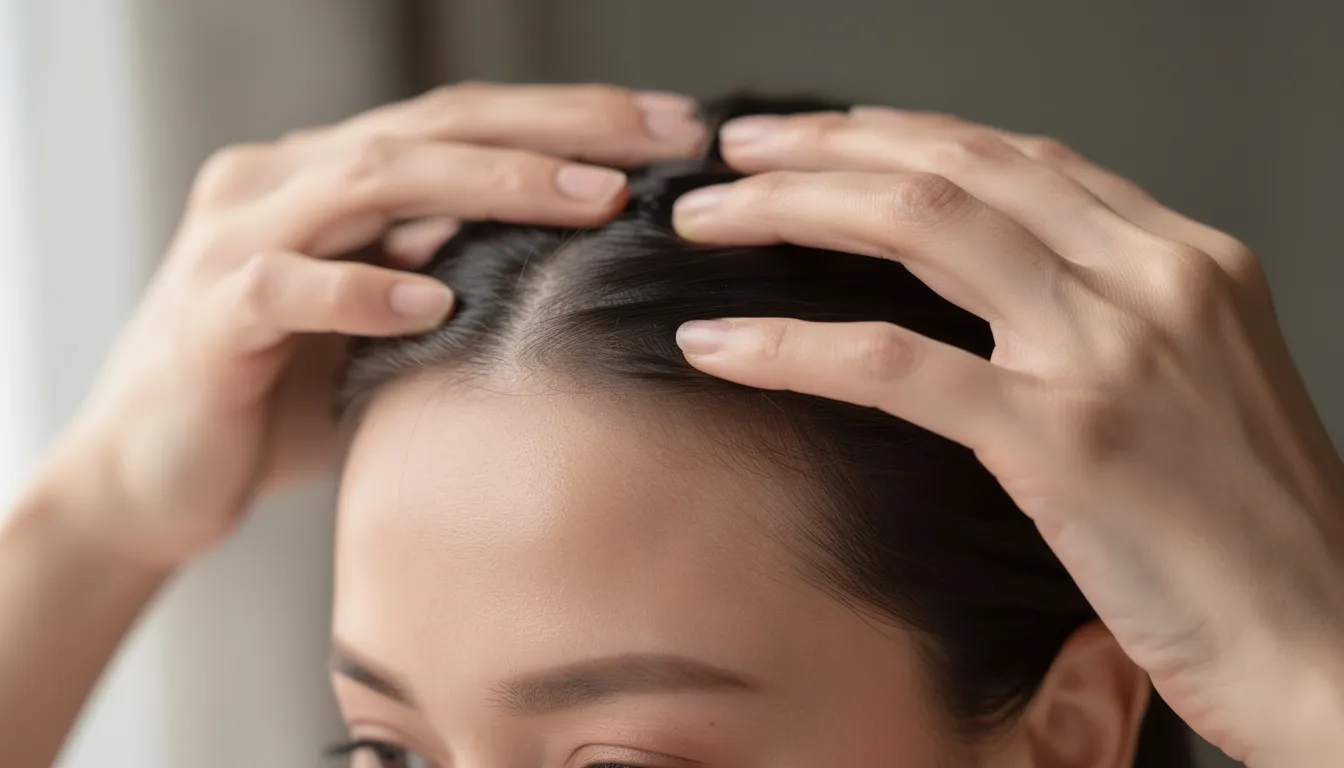
Most peptide serum products are designed as leave-on treatments:
- Cleanse first – Apply to a clean, dry scalp for optimal absorption
- Use a few drops – Most formulations require only a small amount
- Massage thoroughly – Spend 2–3 minutes working the product into your scalp to enhance blood circulation
- Leave on – Don’t rinse; peptides need contact time to work
- Apply consistently – Once or twice daily, depending on product instructions
In-Clinic Procedures
For enhanced results, some clinics offer:
- Microneedling with peptide cocktails – Creates micro-channels that dramatically improve topical delivery
- Microinjections – Direct delivery into the scalp in medical/aesthetic settings
- Combination therapy – Peptides alongside platelet rich plasma or low-level laser therapy
Typical treatment frequency is every 4–6 weeks for several sessions, followed by maintenance.
Oral Supplements
For collagen peptides and hair-support complexes:
- Take daily with food for better absorption
- Expect to use for at least 3–6 months before evaluating benefit
- Look for formulas that include biotin, amino acids, and essential nutrients
- Quality matters—choose hydrolyzed collagen for better bioavailability
Building a Complete Routine
Peptides work best as part of a broader approach:
- Use gentle, sulfate-free cleansing to support scalp health
- Avoid harsh chemical treatments that damage follicles
- Manage stress (chronic stress contributes to telogen effluvium)
- Address nutritional deficiencies via blood tests when appropriate
- Consider combining with proven treatments under professional guidance
Safety, Side Effects, and Who Should Avoid Peptides
Most cosmetic peptide products are generally well-tolerated when used as directed. However, individual reactions can occur.
Common mild side effects for topicals:
- Temporary redness at application sites
- Itching or mild irritation, especially initially
- More pronounced reactions when combined with alcohol-based vehicles or microneedling
Recommendations:
- Perform a patch test on a small scalp area for several days before full use
- Start with lower frequency (once daily) and increase as tolerated
- Discontinue use if persistent irritation develops
Who should exercise caution:
- Pregnant or breastfeeding individuals – limited safety data exists; consult a healthcare professional before starting any peptide-based regimen
- People with active scalp disease (severe psoriasis, infections) – address underlying conditions first
- Those experiencing unexplained rapid shedding – see a dermatologist to rule out medical causes before relying on cosmetic peptides
- Individuals with sensitive or reactive skin – may need to avoid products with additional active ingredients
Peptides aren’t appropriate as first-line treatment for conditions like alopecia areata (autoimmune hair loss) or scarring alopecias, which require medical management.
Future Directions in Peptide-Based Hair Regeneration
Research into peptide-based hair regeneration is advancing rapidly. Here’s what may reach clinical practice in the 2025–2035 timeframe.
Improved delivery systems:
- Ionic liquid-based microemulsions have shown roughly 3–4× better copper peptide penetration through skin in preclinical models
- Nano-carriers and liposomes designed to release peptides directly into follicles
- Thermodynamically stable formulations that maintain peptide activity longer
Promising preclinical results:
- Animal studies using C57BL/6 mouse models (published 2022–2023) demonstrated that optimized copper peptide carriers trigger earlier onset of anagen
- Some experimental setups showed superior hair regrowth compared with 5% minoxidil
- AIMP1-derived peptides (TN41) doubled hair growth rate in mouse models within six days
Emerging targets:
- Highly targeted biomimetic peptides acting on follicle stem cells
- Adiponectin receptor agonists (like APN5) for low-dose, high-efficacy treatments
- Peptides designed for specific growth factor receptors to minimize systemic exposure
Large, controlled human trials are still needed to confirm long-term safety, optimal dosing, and comparative efficacy versus established treatments. The field is moving toward personalized peptide cocktails that could be tailored to individual patterns of hair loss.
Conclusion
- Peptides offer a promising, biologically plausible way to boost hair growth, improve hair density, and support scalp health—but they should not be marketed as miraculous cures for baldness.
- Copper peptides (GHK-Cu), biotinoyl tripeptide-1, acetyl tetrapeptide-3, and collagen peptides currently have the strongest supporting data, especially when used consistently for 3–6 months.
- For best results with hair thinning or early-stage androgenetic alopecia, combine peptide therapy with evidence-based treatments and professional guidance. Peptides promote hair growth most effectively as part of a comprehensive approach.
- Ongoing research into delivery systems and next-generation biomimetic peptides may significantly expand effective options for hair preservation and hair regrowth in the coming years.
Whether you’re looking to regrow hair, reduce shedding, or simply maintain healthier hair, peptides represent a valuable tool in modern hair care. Start with realistic expectations, commit to consistency, and consider working with a dermatologist to develop a personalized strategy for your specific situation.
FAQ
Q: How long does it usually take to see results from peptide hair products?
A: Most clinical and manufacturer studies report noticeable changes in shedding and hair density after about 3–6 months of consistent daily use. Minor improvements in hair texture and breakage may appear sooner (around 8–12 weeks), but meaningful new hair growth or significant increase in thickness is rarely visible in less than three months.
Q: Can peptides regrow hair on completely bald areas?
A: Peptides work best on areas with miniaturized but still living follicles—meaning early to moderate thinning hair. On shiny, long-standing bald scalp where follicles are largely replaced by scar-like tissue, peptides alone are very unlikely to restore dense coverage. Surgical options like hair transplantation are usually required for advanced hair loss.
Q: Are peptide serums safe to use with minoxidil or finasteride?
A: In general, yes—most people can safely combine topical peptide serums with minoxidil and oral or topical finasteride. Many clinicians encourage this combination for a multimodal approach to treating hair loss. Introduce one product at a time and consult a healthcare professional if you experience scalp irritation or systemic side effects.
Q: Do I need microneedling for peptide products to work?
A: Microneedling can enhance penetration of certain peptides and may accelerate or amplify results, especially in clinic-grade treatments. However, it’s not strictly required. Well-formulated leave-on serums used consistently can still provide benefits without microneedling, particularly for mild thinning. Think of microneedling as an optional boost rather than a necessity.
Q: Are there specific conditions where peptides are unlikely to help?
A: Peptides are less effective when hair loss is driven by uncontrolled medical conditions (such as advanced scarring alopecias, untreated thyroid disease, or severe nutritional deficiencies) or when follicles are already destroyed. In these cases, addressing the underlying issue with a physician—potentially including oleanolic acid-containing treatments for specific conditions—is more critical than relying on cosmetic peptide products alone.