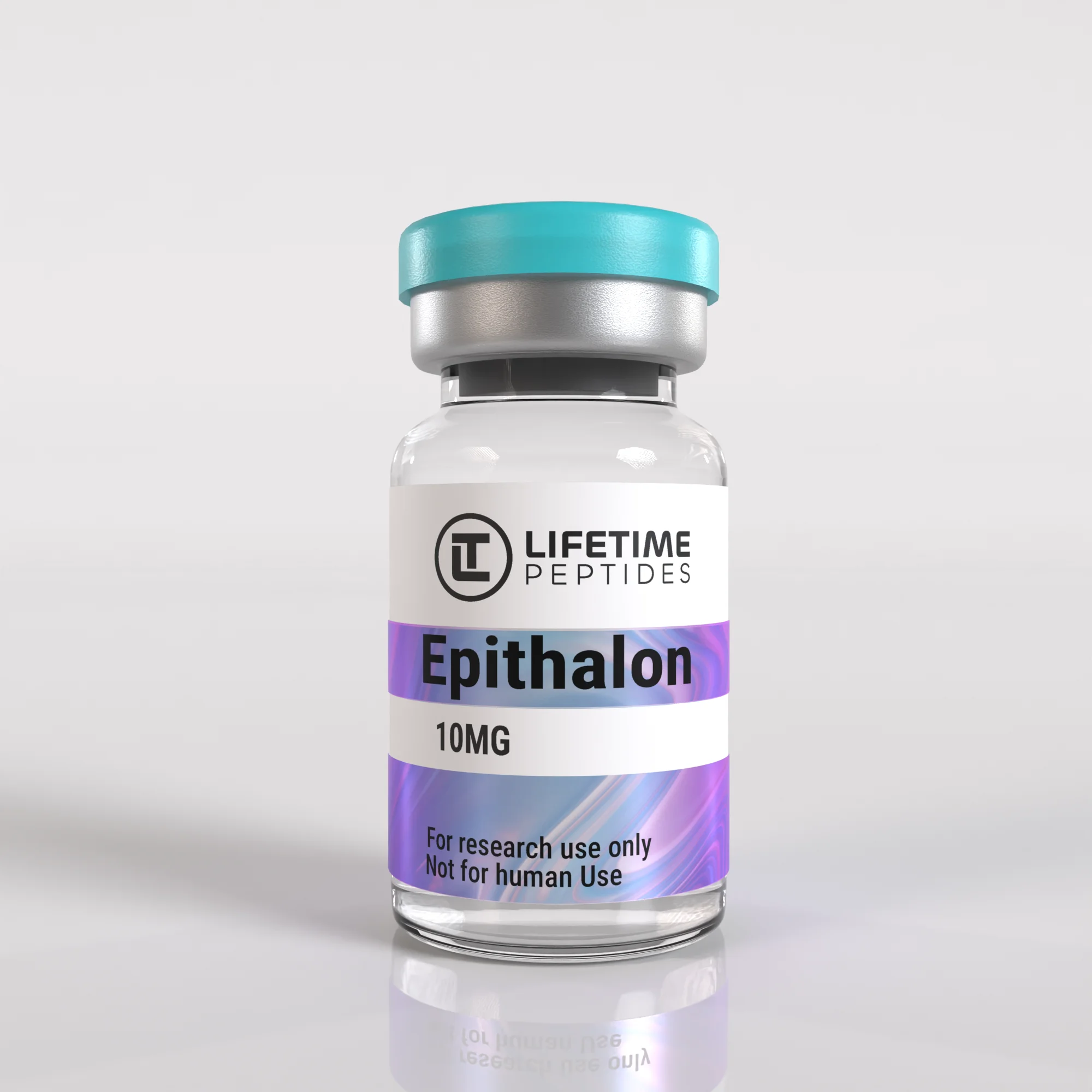
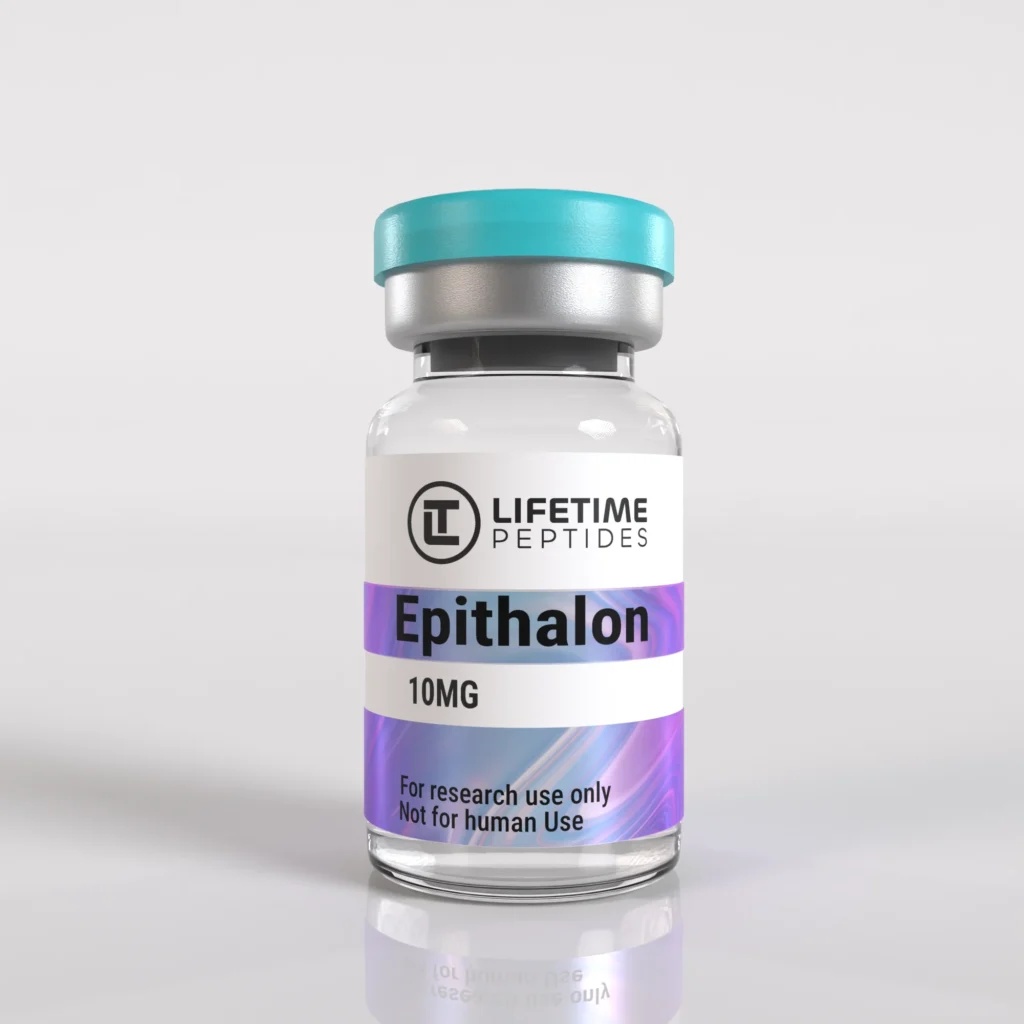
Epithalon (also known as Epitalon or Epithalamin)
is a synthetic tetrapeptide (Ala-Glu-Asp-Gly) that was originally discovered and studied by Russian scientist
Professor Vladimir Khavinson. It is associated with the pineal gland and has been investigated for its
potential role in telomerase activation, cellular longevity, and age-related health support.
Research indicates Epithalon may regulate melatonin production, improve antioxidant activity,
and support overall healthy aging processes.
1. Telomerase Activation
Research suggests Epithalon may stimulate telomerase activity in cells,
helping to maintain telomere length and potentially delaying cellular senescence.
This mechanism has linked Epithalon with longevity and anti-aging research.
2. Antioxidant Effects
Epithalon has been reported to enhance antioxidant defenses,
reducing oxidative stress and protecting cells from free radical damage.
This is significant in the context of aging and degenerative conditions.
3. Circadian Rhythm and Melatonin
Studies indicate Epithalon may regulate melatonin secretion from the pineal gland,
improving sleep patterns, circadian rhythm alignment, and age-related hormonal balance.
4. Immune System Modulation
Some preclinical and clinical studies have shown improved immune response in elderly subjects,
suggesting a role for Epithalon in immunomodulation and healthy longevity.
Future studies are focused on validating Epithalon’s telomerase-activating properties,
its impact on lifespan extension, and broader applications in neuroprotection, cancer research,
and age-related degenerative disease prevention.





Reviews
There are no reviews yet.