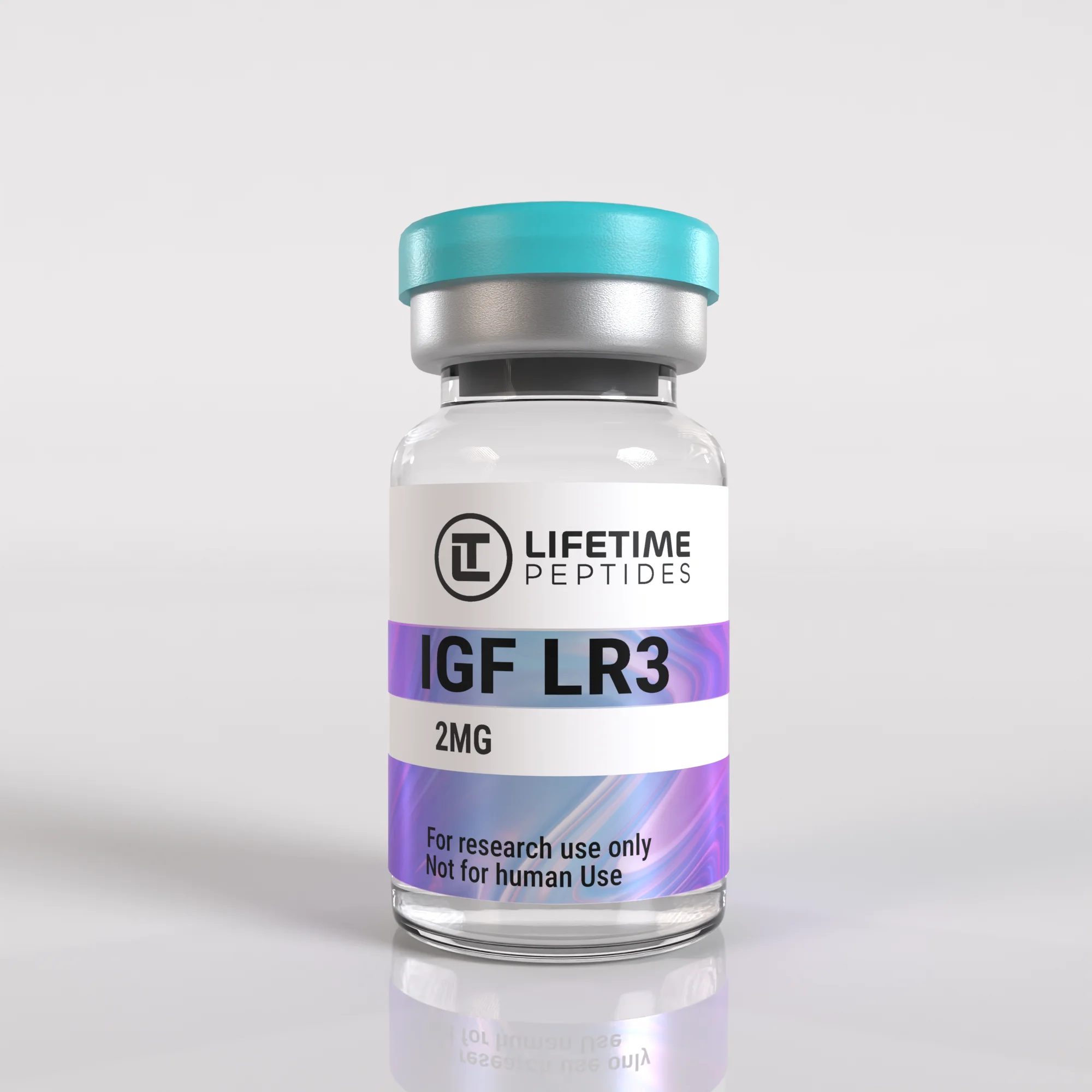
IGF-1 LR3 (Long Arg3 Insulin-like Growth Factor-1) is a synthetic analog of human IGF-1,
modified to extend its half-life and bioactivity. IGF-1 is a peptide hormone structurally similar to insulin,
primarily produced in the liver in response to growth hormone (GH) stimulation.
The LR3 modification enhances stability in the bloodstream,
allowing for prolonged activity and greater research potential in muscle growth, repair,
and metabolic regulation.
1. Muscle Growth & Repair
IGF-1 LR3 has been shown in research to stimulate muscle cell proliferation and differentiation,
supporting hypertrophy and repair after injury. Its extended activity allows for greater impact compared to natural IGF-1.
2. Protein Synthesis & Metabolism
IGF-1 LR3 plays a central role in protein synthesis, glucose utilization, and lipid metabolism.
Research indicates it may improve nitrogen retention and lean body mass in experimental models.
3. Nerve & Tissue Regeneration
IGF-1 is linked to neuroprotection and nerve repair. Studies suggest IGF-1 LR3 may enhance regeneration in nerve injuries
and support recovery in tissues affected by trauma or degenerative processes.
4. Anti-Aging & Longevity Research
As IGF-1 influences cellular repair and regeneration,
IGF-1 LR3 is being studied for its potential role in anti-aging, recovery, and vitality support.
However, long-term safety and systemic effects remain under evaluation.
Future investigations may explore IGF-1 LR3’s applications in muscle wasting disorders,
age-related decline, and regenerative medicine. Studies may also assess its therapeutic potential
in neurological repair, wound healing, and metabolic disease management.





Reviews
There are no reviews yet.